


MERV 13 air filters
Superior protection replacement filters for furnaces, AC systems, and whole-house HVAC units.
Protects against:
Superior protection replacement filters for furnaces, AC systems, and whole-house HVAC units.
Protects against:

Processed quickly, ships fast, free for all orders

Premium quality pleated filters in a rigid frame

Find your perfect fit with our complete size range

Compatible with all the major HVAC unit brands
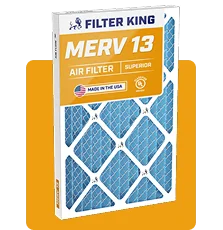
MERV 13 filters provide high efficiency particulate air protection against microscopic particles that are common in most homes. These air filters are rated to capture very fine particles in the 0.3-1.0 micron range. MERV 13 filters protect against:
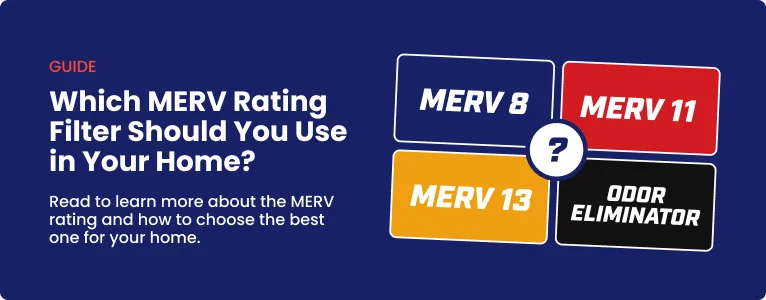
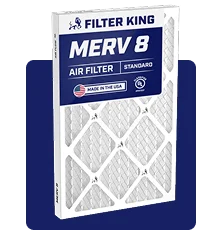
If your HVAC system is not designed for high efficiency filters, MERV 11 or MERV 8 air filters may be a better fit. Or you can opt for the MERV 8 Carbon filters in case you need to remove persisting odors. These air filters still reduce everyday dust and allergens while ensuring gentler airflow.
MERV 13 filters are ideal for homes where air quality is a top priority. They're ideal for households with allergies, asthma, and respiratory issues. The right filter can also help households with immunocompromised family members and pet owners who may require extra protection. They're suitable for urban homes near traffic and light commercial spaces, such as offices or medical waiting rooms and even clinics in some instances. Shared living spaces and rental units may benefit from MERV 13 filters, as the filter is designed to capture even more particles than alternative ratings.

The diagonal straps die-cut into the frame bond to each pleat tip, keeping them evenly spaced so the filter won't bow.
Traps up to 90% of everyday particles like dust mites, pollen, pet dander, and mold spores, while still letting air flow through freely.
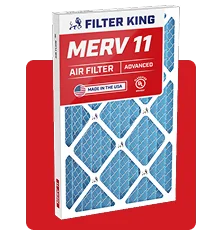
Rated to capture up to 95% of common particles, MERV 11 media catches dust mites, pollen, pet dander, and mold spores, as well as fine dust and smoke.
Stops up to 98% of particles passing through, including dust mites, pollen, pet dander, and mold spores, as well as fine dust, smoke, and bacteria.
Traps up to 90% of everyday particles like dust mites, pollen, pet dander, and mold spores, while still letting air flow through freely.
An expanded wire grid bonds to the media, stopping the pleats from shifting or pulling away under airflow.
An expanded wire grid bonds to the media, stopping the pleats from shifting or pulling away under airflow.
An expanded wire grid bonds to the media, stopping the pleats from shifting or pulling away under airflow.
A layer of activated carbon absorbs odor molecules from cooking, pets, and chemical fumes – catching what the filter media alone can't.
The same heavy-duty, moisture-resistant beverage board on the exit side holds its shape and keeps a tight seal in your vent or wall slot.
An expanded wire grid bonds to the media, stopping the pleats from shifting or pulling away under airflow.


4.6 stars, 5243 reviews

4.5 stars, 4314 reviews
"I am a new customer and so happy I found Filter King. Their customer service is truly outstanding."
 Verified Buyer
"Easy to find sizes"
Verified Buyer
"These fit perfectly, it’s so nice to get a custom size."
Verified Buyer
"Great prices, good quality."
Verified Buyer
"When I accidently ordered the wrong size... I called & customer service fixed my error with correct size. Shipping was prompt!!! Very pleased with Filter King!! 😊"
Verified Buyer
"These are high quality filters and the price was fair."
Verified Buyer
"Excellent product"
Verified Buyer
"Looks good, fit well"
Verified Buyer
"Quick shipping I originally ordered the wrong size returning and exchange was very easy."
Verified Buyer
"Easy ordering, fast shipping, customer service that’s reachable. Highly recommend."
Verified Buyer
Filter King supplies MERV 13 filters for residential and commercial air handling systems in hundreds of standard sizes, and we produce custom dimensions tailored to your exact needs.
All filters adhere to ASHRAE specifications and bear UL Classification #R41537, ensuring hospital-grade filtration performance in your HVAC equipment.
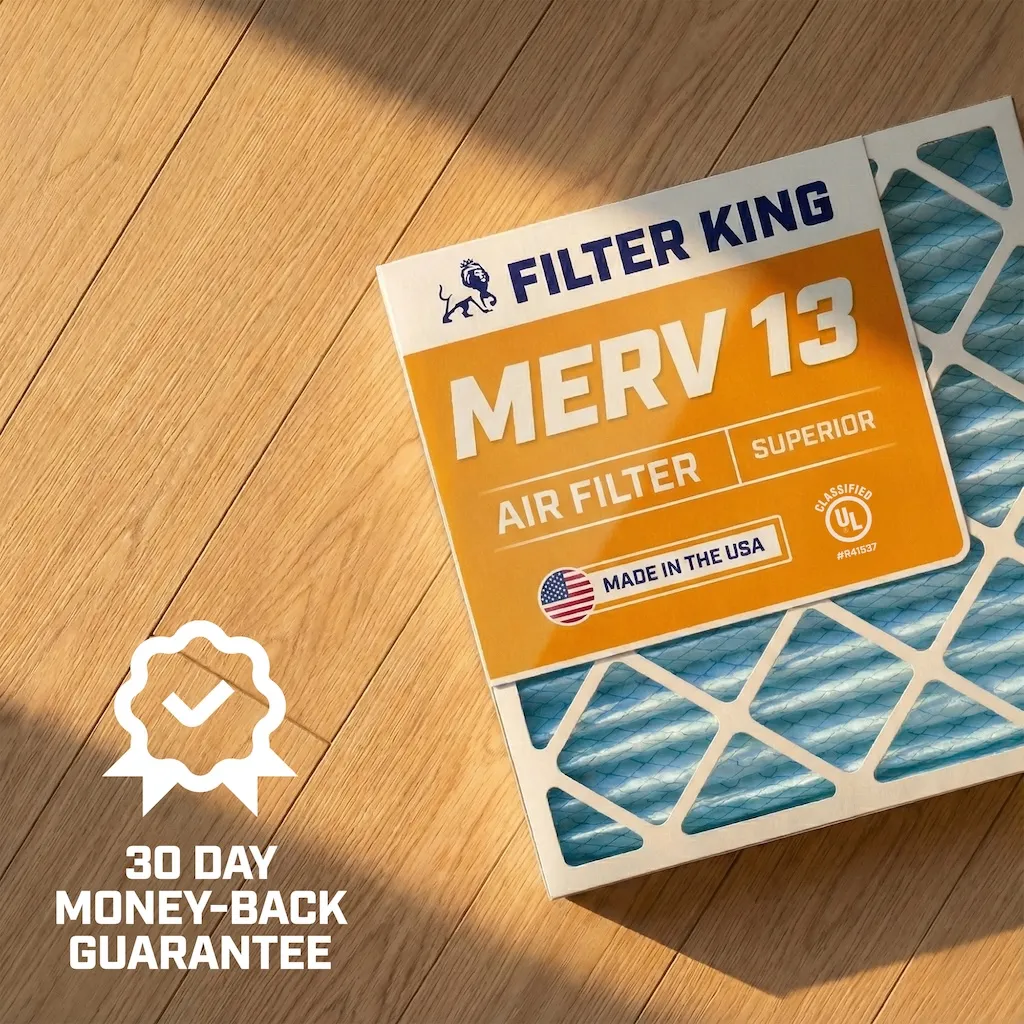
In case your MERV 13 filters don't meet your requirements, we offer a 30-day money-back guarantee with hassle-free returns for all stocked sizes to ensure peace of mind so that you can shop with complete confidence.
Check the label on your current filter or use a tape measure to get the exact length, width, and depth before selecting your size.
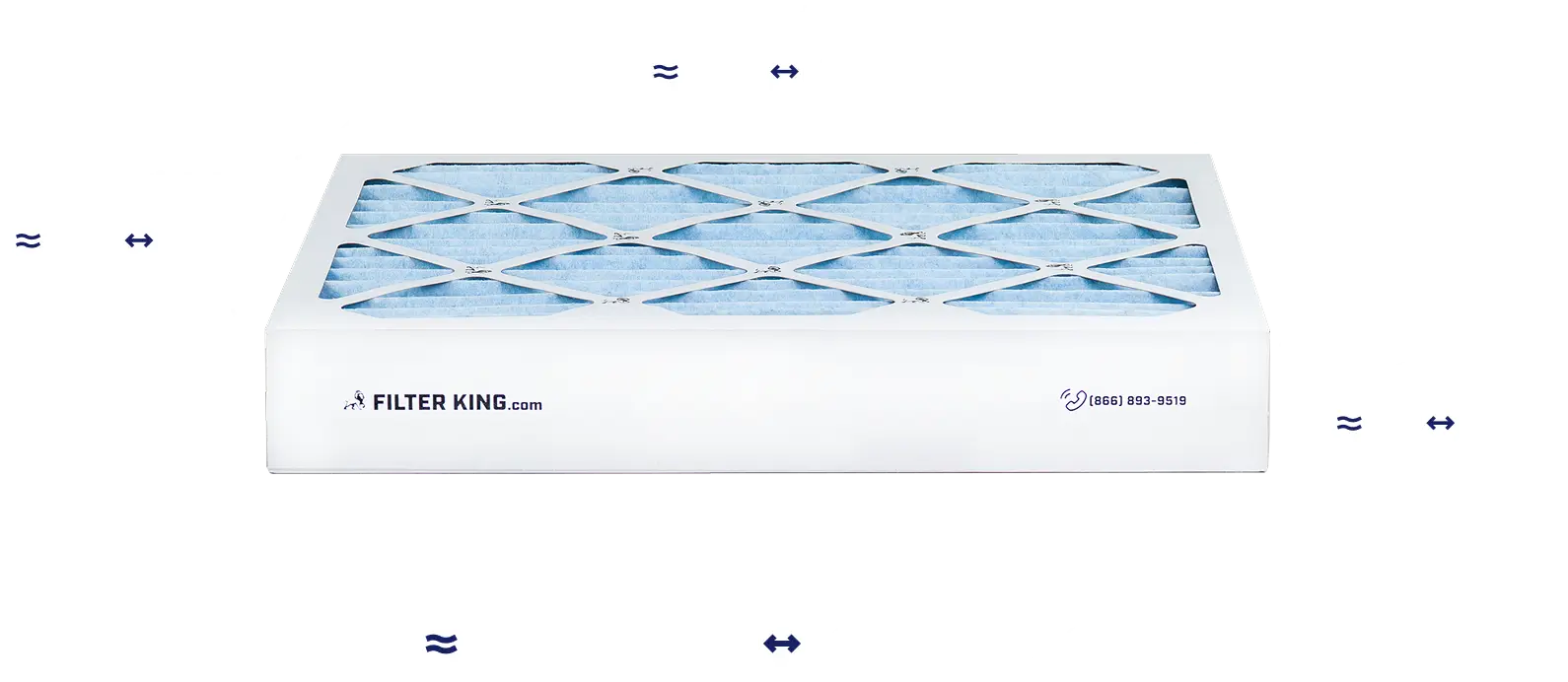
 Nominal size
Nominal size is what you normally see printed on the label. This is usually a rounded size which is often not the true size of your filter.
 Actual size
Actual size is the true size of the air filter, usually written in smaller font below the nominal size.
Measure your current air filter or the length, width, and depth of the opening slot to get the actual size. Round it up to the nearest whole inch to get the nominal size.
Never run out of a clean filter – and cancel anytime if your plans change
 Pay full price on every order
Need to remember to reorder every time you run out
Forget to reorder, and a dirty filter can drive up your energy bills.
Pay full price on every order
Need to remember to reorder every time you run out
Forget to reorder, and a dirty filter can drive up your energy bills.
 Get 5% off every order, automatically
New filters arrive right when you need them
Pause, skip, or cancel anytime – no commitment needed.
Get 5% off every order, automatically
New filters arrive right when you need them
Pause, skip, or cancel anytime – no commitment needed.
MERV 13 sits at the top end of traditional residential filtration—it's the premium air filter choice for indoor air quality improvement. Rather than just catching dust, MERV 13 air filters target the small, hard-to-see particles that cause the most trouble: fine dust, mold spores, pet dander, and certain bacteria.
Compared to lower ratings, MERV 13 filter performance means significantly more particles will be captured on every pass through your HVAC system. MERV 13 air filtration benefits mean fewer irritants in the air you breathe and a cleaner baseline for health-focused households. However, it's important to note that higher efficiency comes with higher expectations with your HVAC system. MERV 13 requires:
When used properly, MERV 13 filters deliver on its premium performance promise. Understanding MERV 13 benefits will help you find the right premium air filter for your home, based on your existing HVAC system. The following sections will explain how it works and what your system requires to support it. MERV 13 air filtration solutions are ideal for homes with surrounding smog, wildfire, and those seeking relief from severe allergies, asthma, and respiratory illnesses.
MERV 13 filters are the top-performing filters for standard residential units. With particle capture down to 0.3 microns with approximately 75% efficiency (ASHRAE rating), MERV 13 is an excellent choice for those who prioritize clean air in the home. In addition to this, MERV 13 filters capture 98% of common particles, which are typically of larger size. Here's what this means:
Pleated media density (much more noticeable than MERV 11), means more fold per inch. Thicker media is required to manage airflow while maximizing surface area. Air conditioning engineers created MERV 13 to prevent airflow collapse.
Performance per MERV 13 thickness:
Lifespan reality: MERV 13 clogs faster than lower ratings, as higher filtration=more particle accumulation. This is expected and by design. Clogging speed will depend heavily on household particle load. Regular replacement is not optional for optimal protection and particle collection.
Limitations: MERV 13 captures particles, but does not capture gases, odors, or viruses. MERV 13 is excellent at what it does, but it is not a complete air purification system.
Cost-Performance Trade-Off: MERV 13 costs more per filter but provides superior protection for households in need of extreme filtration.
While MERV 13 offers superior performance, it also requires system demands that must be accounted for when using the filter type. When capturing tiny particles and small particles properly, the right filter is essential. Different filters on the market may seem confusing if you're unfamiliar with the ratings and how MERV 13 works. The denser media required to achieve this level of filtration restricts airflow more than lower ratings. This is why system compatibility is critical for MERV 13. A system that cannot handle the pressure drop won't deliver on MERV 13's promises. Explore compatibility requirements to feel comfortable with and confident in your decision when the time comes.
MERV 13 requires compatible systems; not all systems can handle it.
Airflow restrictions reality: MERV 13 is the most restrictive standard residential filter (it is more restrictive than MERV 8 and MERV 11 filters). If your HVAC system is not designed for high efficiency filters, you may notice a decrease in airflow. Modern systems often handle MERV 13 filters much better than outdated systems.
System types that work well with MERV 13:
System types where MERV 13 causes problems:
Compatibility assessment process:
Warning signs your system struggles with MERV 13:
What happens if the system is incompatible, and you're forced to choose between MERV 13 benefits and system health:
A professional assessment may cost between $100-200 but may save up to $500 in system repairs or energy waste. Proper sizing is critical, as undersized MERV 13 filters will gap, and oversized will simply not fit.
When systems are compatible with MERV 13, results can be impressive, but it's important to note that filters will clog faster due to superior capture. Understanding MERV 13's specific issues can help you maintain premium performance while catching problems before they impact your health or system's capabilities. To avoid MERV 13 airflow restriction issues, always verify your system's compatibility before selecting a MERV 13 filter for your home or commercial space. Knowing what to watch for is also key to preventing issues from spiraling out of control or placing too much strain on your existing HVAC system.
Issue 1: System is struggling after switching to MERV 13
This is often a compatibility issue, not a filter quality problem. Is your system explicitly rated for MERV 13? If not, issues may occur. Solutions include:
Issue 2: Allergies or respiratory issues are not improving despite using MERV 13
MERV 13 performs excellently at particle capture, so the issue is likely elsewhere.
Diagnostics include:
MERV 13 helps but doesn't replace all IAQ, or Indoor Air Quality strategies. Consider if the issue is allergies or if it is a system-wide air circulation problem.
Issue 3: Filter clogging extremely fast (requiring replacements monthly or more)
This is expected for MERV 13 in high-particle households. However, monthly replacements suggest either:
Solution approaches include:
Issue 4: High energy bills after switching to MERV 13
Track your energy bills before and after and note if the cost increase is significant or gradual. If your energy bill spikes are significant and immediate, it may indicate system incompatibility. If it is gradual, however, this may be due to filter clogging and seasonal issues occurring earlier than expected.
Solution: Monitor your filter's condition, consider more frequent replacements if your household's particle load is higher than expected.
Issue 5: Filter fit problems (undersized, oversized, or unusual shapes)
MERV 13 is available in many air filter sizes, but you need to make sure the you're using the right size for your specific HVAC unit. Never force an air filter into place—improper fits negate all benefits. Conduct a visual inspection of your MERV 13 filter:
MERV 13 performance varies dramatically by season and household demands. Households with multiple allergens or air quality concerns can benefit from MERV 13 filters. Because MERV 13 captures so much, seasonal particle load swings means you may need to adjust replacement timing according to your specific needs (and how often you run your furnace).
If your MERV 13 filter is not working, consider downgrading to MERV 11 to alleviate some of the stress and strain on your system (especially if you do not have a high-efficiency system or if your system is overworked).
If you've selected MERV 13 for your home, you're already investing in a premium air filtration solution. MERV 13 households typically care about air quality intensely, so seasonal adaptation is important.
To get the most out of your filter, thinking in seasons (rather than every 3 months), can help. A smart MERV 13 seasonal plan ensures optimal performance when you need it most.
Spring: Allergens and pollen
Spring is where MERV 13 filters shine. These high-efficiency filters are designed to capture a high percentage of finer allergens, making them especially helpful for spring allergies. During the spring, it's important to prepare for the season by expecting faster clogging (during peak pollen weeks), as the filter is likely to load up more quickly.
Prepare for the spring by replacing your filter with a fresh filter before the pollen hits. During heavy pollen weeks, visually inspect your filter weekly to assess its condition. Spring is when allergies are more prevalent, so keeping your filters fresh is crucial for optimal performance and environmental control.
Replacement intervals: Your normal 2–3 month schedule for MERV 13 filters may be reduced to 6–8 weeks at a time during the spring.
Summer: Cooling loads and humidity
In the summertime, air conditioners often run for longer stretches, pushing a high volume of air through your MERV 13 filter. You may experience continuous cooling, requiring more cycles and more particles being captured. In humid climates, mold spores are more prevalent. MERV 13 filters handle these well, especially in locations where humidity is being managed. Using dehumidifiers or your AC's dehumidification features can help keep indoor humidity below 50%, which supports both comfort and long-term filtration.
Replacement intervals: If your AC unit is always on during the summer, expect replacement intervals to shorten.
Fall: Pollen, pet shedding, and outdoor mold
Fall brings a mixture of both increased pet shedding and outdoor mold types. In damp climates, mold increases are more common. Pet-heavy homes may see a bump in filter loading, from fur and pet dander. The fall is an excellent time to conduct a checkup and to replace your filter so you're ready to start the winter with a clean baseline.
Replacement intervals: May increase if you are living in a household with numerous pets during the fall
Winter: Heating season and indoor recirculation
In colder climates, you're more likely to run your system persistently, recirculating indoor air through your MERV 13 filter. Continuous airflow means the steady removal of indoor particles, dust, and pet dander. Dry air also equals more dust movement. Heating can dry the air, kicking up additional dust that your filter will capture. With less outdoor pollen and allergens (along with more predictable indoor conditions), replacement schedules often stabilize in the winter.
Replacement intervals: Often stabilize during the winter (less weather-driven fluctuations)
Regional/individual customization
Every home is different. Using regional allergy calendars can help you better prepare for higher pollen and dust. Pet households may also have higher year-round particle loads. High-pollen areas may make both spring and fall a bit more challenging. Consider whether you live in a humid or dry climate to determine how frequently you'll need to swap your filters.
Tracking your own data is possible by logging filter changes, noting what an old filter looked like, and watching for weather patterns. Use the information you note to fine-tune replacement timing and even your subscription frequency (or bulk ordering from FilterKing), so your MERV 13 seasonal plan matches real-world conditions.
Takeaways: MERV 13 households get the best results with anticipatory management—replacing filters before they become clogged, rather than waiting for allergies to worsen or a problem to arise.
MERV 13's superior performance is a powerful filtration tool, especially when you adjust your replacement schedule to match seasons accordingly. Even with the best premium air filtration, it's important to take note of your filter's media accumulation throughout the year. From handling spring allergies MERV 13 filters are suitable as a year-round option. Your home's overall IAQ, or Indoor Air Quality, will depend on ventilation, source control, and humidity.
While MERV 13 is an excellent choice for fine particle capture, it's just one part of your HVAC system. Understanding how filters, home systems, and habits work together is key to getting maximum control and comfort in the home year-round.
MERV 13 filters provide a powerful upgrade to any home's HVAC system (when compatible with MERV 13 filters). However, it's important to note that even premium filtration solutions have limits. MERV 13 does not directly capture odors, ultrafine particles, gases, viruses, and some VOCs (volatile organic compounds). To truly enhance respiratory health air quality, you'll want to pair the right filter with other smart tools and habits in your home.
Building a complete strategy around your MERV 13 filters is a way to boost your home's IAQ in addition to installing the right filter media. Being proactive around the home can significantly reduce mites, dust, pollen, and other irritants.
Build a Complete Strategy Around MERV 13 Filters:
Pet management: Designated sleeping areas for pets, frequent vacuuming, and regular grooming can significantly reduce pet dander and hair from accumulating throughout the home.
Dust mites: Anti-allergen bedding and keeping indoor humidity below 50% can reduce the chance of dust mites.
Pollen: Removing shoes in the home, wiping down pets after a walk, and keeping windows closed during peak allergy seasons.
Mold: Dehumidification in damp areas and prompt leak repairs will have a significant impact on the potential for mold spores to grow in the home.
Ventilation Strategy:
Ventilation is essential. Fresh air exchange can make a world of a difference in the body, as stale air presents its own issues (especially in those who are sensitive to allergens). Open windows and unexpected gaps in filters can bring in unfiltered allergens. The goal is controlled ventilation, where outside air passes through your MERV 13 filter before it is circulated through the home.
Humidity management:
Humidity management is critical in any home, even with MERV 13 filters in place. Keeping humidity below 50% helps with preventing mold growth, reducing dust mite populations, and improving how particles behave in your air filtration system.
Localized solutions help to fill in the gaps:
A bedroom HEPA air purifier where you sleep between 7 and 8 hours each night. A HEPA vacuum so that dust is easily captured instead of being blown throughout the home. Using UV or activated carbon filters if you require extra odor and/or gas control and capture.
Professional Assessment
A ductwork evaluation, basic air quality testing, and humidity testing are all assessments that can help your MERV 13 filter work as efficiently as possible. System optimizations can also help determine if MERV 13 will work better with ductwork changes and upgrades.
Consistent filter changes and basic routine maintenance will allow sensitive individuals to feel and experience the improvements in just 2–4 weeks once the MERV 13 filter is installed. While MERV 13 filters may not eliminate and erase all symptoms you experience, it can significantly reduce dander, bacteria, and finer particles that are due to your lifestyle or surrounding environment.
MERV 13 filters will help improve sleep quality with a lower allergen environment. Respiratory function will improve with consistent, clean air. MERV 13 reduces triggers (from allergies) but doesn't eliminate all symptoms. Replacing filters require discipline, including consistent replacement and maintenance demands.
When air purifiers complement MERV 13:
Bedroom-specific purifiers add local control. Whole-home purifiers duplicate efforts unless addressing specific gases/odors in the home. HEPA purifiers are effective, but energy-intensive; MERV 13 HVAC is more efficient.
Realistic Expectations:
MERV 13 is premium filtration, but results will depend on your household's overall strategy. Consistent maintenance is non-negotiable. Results will require 2–4 weeks for sensitive individuals. Best results occur when combining MERV 13 filters with complementary at-home strategies.
MERV 13 is the foundation of a solid airflow system, but requires complimentary strategies to maximize efficiency when it comes to air quality beyond filters and a whole-home allergy control strategy.
Think of using MERV 13 filters as your premium starting point when working to improve the IAQ, or indoor air quality in your home. Paired with smart tools and good habits, you'll turn a strong filter choice into a comprehensive, sustainable indoor air quality plan. Selecting MERV 13 reflects a commitment to health in the home, allowing you to get the most out of your investment.
Not always. However, MERV 13 can stress older and outdated systems that are not designed for high-efficiency filters. It's essential to verify the compatibility of MERV 13 filters with your HVAC system before making an investment. MERV 13 media is often much denser than alternatives, creating a bit more resistance to airflow. When a system is not designed for high-efficiency filters, the extra resistance can reduce airflow throughout your home and cause your blower to work harder than usual.
For 4-inch or 5-inch pleated filter slots, MERV 13 air filters may last between 3–6 months, especially if you have a larger household or pet dander in the home. In some homes with less dust, the filter may last between 9–12 months, assuming there are no shedding pets, no ongoing construction or remodeling taking place. You'll want to replace your filter every 2–3 months if you smoke indoors, cook frequently, or have pets in the home. Additionally, replacing your MERV 13 filter every 2–3 months is also advisable if someone in your home has asthma or severe allergies for the best capture possible.
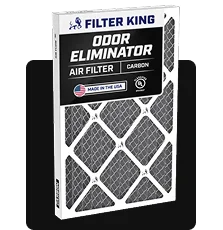
Currently, our carbon odor eliminator filters are built for MERV 8 filters. This means you can choose MERV 8 Carbon for odor reduction caused by pet odors, smoking indoors, and even light VOCs, or Volatile Organic Compounds in the home. Standard MERV 8, 11, and 13 pleated filters are ideal for dust, allergens, and finer particles.
For both maximum allergen removal and odor control, selecting MERV 11 or MERV 13 air filters is ideal, so long as your HVAC system is suited for higher MERV ratings.
Selecting the right MERV depends on your symptoms and the severity of your allergies.
MERV 11 is a great choice for most allergy sufferers. It captures the majority of particles, such as dust, pet dander, pollen, and even mold spores. MERV 11 filters are often compatible with more systems than when going with a MERV 13 air filter.
MERV 13 air filters capture even smaller particles than MERV 11, including bacteria and fine dust. MERV 13 can capture smog and smoke particles and is advisable for homes with severe asthma, allergies, or even those who live in a region where wildfires aren't uncommon. However, it's essential to verify that your system is well-suited for MERV 13 before selecting MERV 13 filters for your home.
FilterKing's MERV 13 filters are designed for central HVAC and furnace systems, not portable room purifiers. Most room purifiers utilize proprietary filter sizes and shapes that are unique to the purifier's system. They also often combine a HEPA-type or high-efficiency filter with built-in carbon layers.
It's essential not to cut down or reshape filters to fit a portable unit, as this can damage the filter's ability and void warranties. If you want MERV 13 performance in your home or office, it's essential to verify compatibility first.
A few factors can cause energy use to go up after switching to MERV 13, such as:
Higher resistance to airflow: MERV 13 media is much denser than alternative filter types. If your system is not designed for high-efficiency filters, the blower may need to work harder while running longer to move clean air throughout the home.
Clogged filters: Overdue filters or clogged filters become more restrictive in terms of airflow. When filters are not properly changed in a timely manner, your system's run time and energy use are likely to increase.
Sizing: It's always essential to ensure your filters fit snugly based on the size your HVAC system uses. If an air filter does not fit snugly, air may bypass the filter and become overly restricted.
If your bill has jumped unexpectedly, check that the filter is the right size and fits appropriately in your media cabinet. Always check to ensure the airflow arrow is pointing the right way (towards the blower). Make sure all vents in your home are open and not blocked by furniture. Replace the filter more frequently, or consider stepping down to MERV 11 if your system is not suitable for MERV 13 filters.

 MERV 8 filters