


Heat pump air filters
Buy replacement heat pump air filters. Choose from 1000+ available sizes or order custom heat pump air filters. Free shipping on all orders.
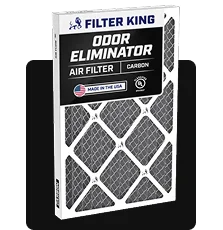
Buy replacement heat pump air filters. Choose from 1000+ available sizes or order custom heat pump air filters. Free shipping on all orders.
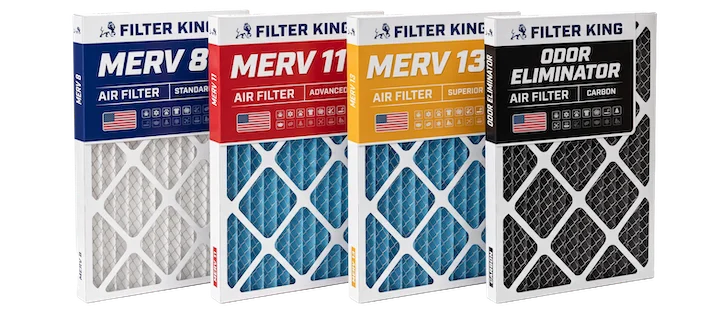

Processed quickly, ships fast, free for all orders

Premium quality pleated filters in a rigid frame

Find your perfect fit with our complete size range

Compatible with all the major HVAC unit brands


4.6 stars, 5243 reviews

4.5 stars, 4314 reviews
"I am a new customer and so happy I found Filter King. Their customer service is truly outstanding."
 Verified Buyer
"Easy to find sizes"
Verified Buyer
"These fit perfectly, it’s so nice to get a custom size."
Verified Buyer
"Great prices, good quality."
Verified Buyer
"When I accidently ordered the wrong size... I called & customer service fixed my error with correct size. Shipping was prompt!!! Very pleased with Filter King!! 😊"
Verified Buyer
"These are high quality filters and the price was fair."
Verified Buyer
"Excellent product"
Verified Buyer
"Looks good, fit well"
Verified Buyer
"Quick shipping I originally ordered the wrong size returning and exchange was very easy."
Verified Buyer
"Easy ordering, fast shipping, customer service that’s reachable. Highly recommend."
Verified Buyer
For best indoor air quality, we recommend you change your HVAC or furnace air filters regularly at different times depending on your situation.


Replace your air filter every 6 weeks to minimize the circulation of bacteria and allergens in the air.

Replace air filters every 2 months to reduce odors as well as pet dander and hair buildup in your system.

Replace your air filter every 2-3 months to reduce airborne particles and maintain cleaner indoor air.

Keeping your heat pump air filter replacement schedule in mind can be challenging to say the least. Make your life easier with Filter King’s auto delivery subscription.



Check the label on your current filter or use a tape measure to determine the length, width, and thickness. Just make sure you know the difference between nominal and actual size.
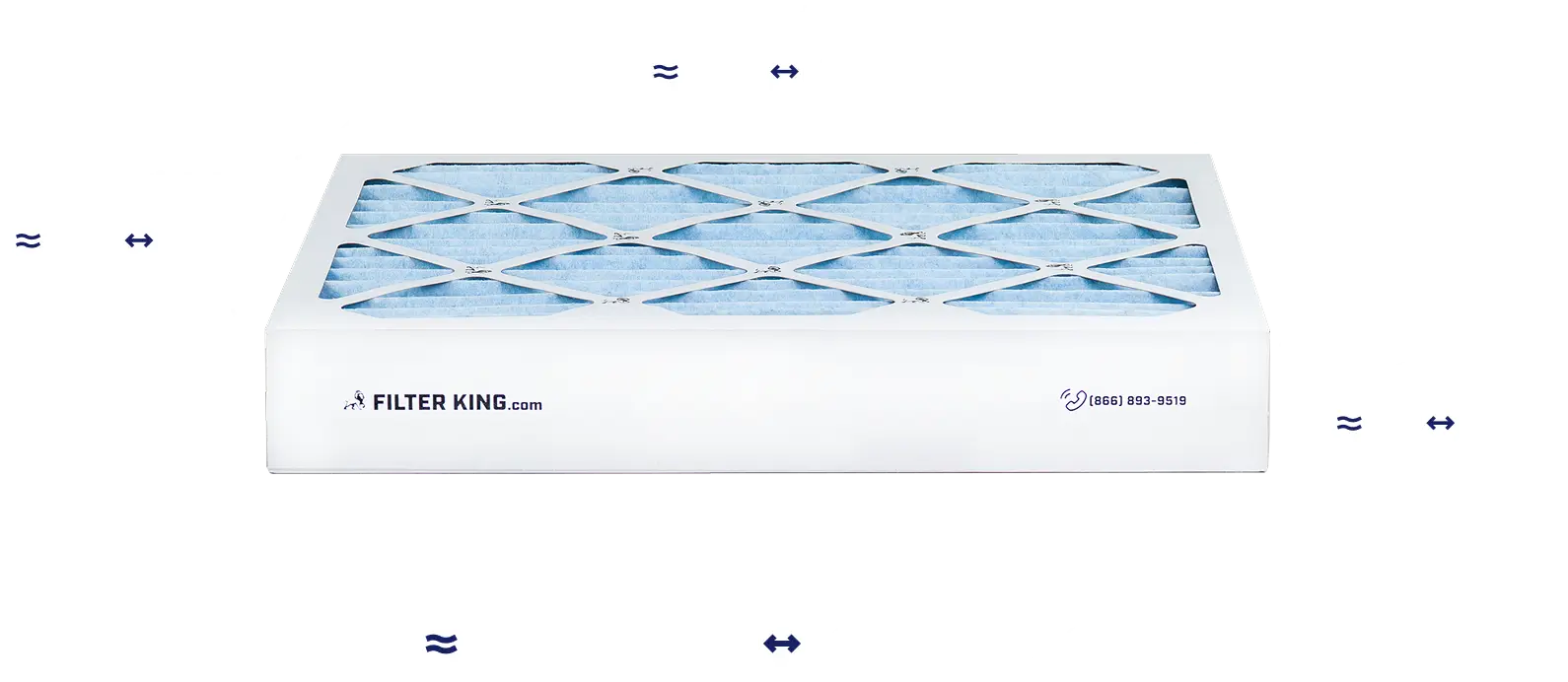
 Nominal size
Nominal size is what you normally see printed on the label. This is usually a rounded size which is often not the true size of your filter.
 Actual size
Actual size is the true size of the air filter, usually written in smaller font below the nominal size.
Measure your current air filter or the length, width, and depth of the opening slot to get the actual size. Round it up to the nearest whole inch to get the nominal size.
Four fulfillment centers across the US mean your filter ships from close to home – faster to your door, built to the same standard every time.
Try it risk-free. Ordered the wrong size? Not what you expected? Send it back within 30 days for an exchange or a full refund. Simple as that.
Free shipping with most orders processed within 24 hours. No waiting around — we get your filters out the door fast.
No. Heat pump systems use standard air filters — the same ones used in furnaces and HVAC systems. Just match the size and MERV rating your system requires. There's no need to buy a filter specifically labeled as heat pump filter.
It depends on the filter thickness. 1-inch filters should be replaced every 30 to 60 days. 2-inch filters can last 60 to 90 days. 4-inch and 5-inch filters can go 6 to 12 months between changes.
Replace your filter more often if you have pets, allergies, or live in a dusty area. A good rule: check it monthly and replace it when it looks gray or clogged.
The arrow points toward the heat pump, in the direction of airflow. Air flows from your home into the return duct, through the filter, and into the heat pump — so the arrow should face the heat pump or blower motor.
Look for the arrow printed on the filter frame. If you install it backwards, the filter won't work properly and can restrict airflow.
A clean filter is white or off-white and you can see light through it. A dirty filter looks gray or brown, and the surface will be visibly clogged with dust, lint, and debris.
If you're not sure, hold it up to a light. If little or no light passes through, it's time to replace it.
Most heat pump filters are located in one of three places: inside the blower compartment of the heat pump, in a slot between the return duct and the heat pump, or behind a return air vent on a wall or ceiling.
Check near your heat pump first — look for a removable cover or a slot where the filter slides in. If you have a return vent with a large grille, the filter may be inside there instead.
Check your current filter — the size is printed on the frame. You'll see three numbers: length, width, and depth (for example, 16x25x1).
If there's no label, measure the filter yourself. Measure length and width first, then depth (thickness). Round to the nearest inch. If your size is unusual, you may need a custom-sized filter.
Most disposable heat pump filters cannot be recycled through regular curbside programs. They contain a mix of cardboard, fiberglass or synthetic fibers, and trapped dust and debris, which makes them difficult to process.
Check with your local waste facility for specific guidelines. Some areas accept them as bulky waste. The cardboard frame can sometimes be separated and recycled on its own if it's not contaminated.

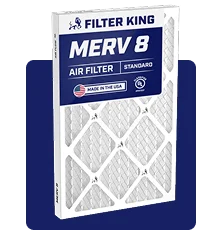
 MERV 8 filters